
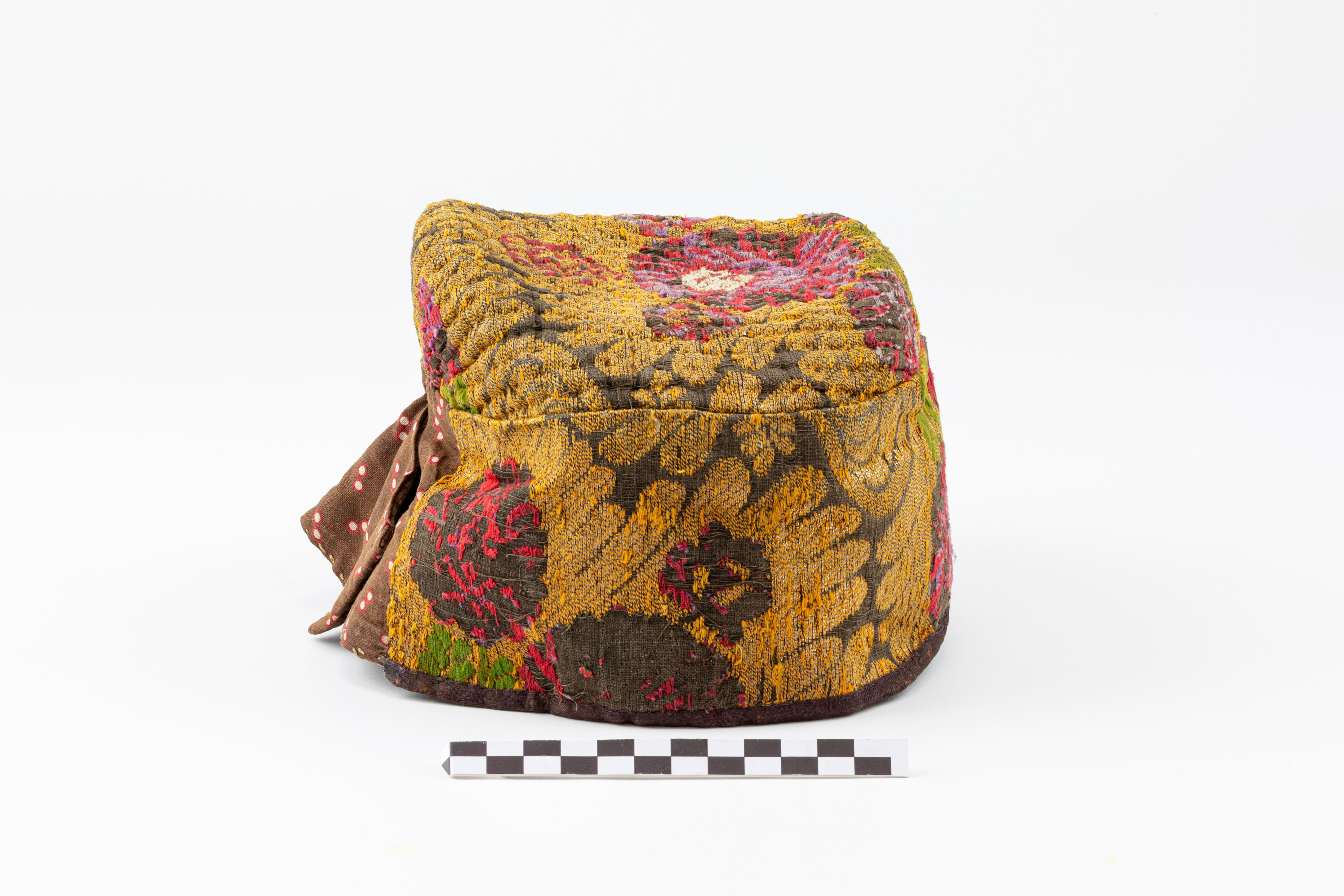
Brocade Ochipok
The headdress has a rounded shape with low vertical sides and a slightly gathered upper section. It is made of brocade fabric decorated with a large vegetal pattern woven in golden, red, pink, and green threads against a dark ground. The rich floral decoration gives the headdress a formal and elegant appearance.
The upper part of the headdress is shaped by gathers, which create a three-dimensional form while emphasising the decorative qualities of the fabric. The lower edge is finished with a narrow binding, giving the object a neat and complete appearance.
Headdresses of this type formed part of the festive ensemble of women’s traditional dress and were worn on ceremonial occasions, religious holidays, and during family rituals. In the 19th century, festive ochipky were distinguished by elaborate decoration, high-quality materials, and complex construction. They not only complemented festive attire but also served as an important marker of a woman’s social and marital status.
According to traditional custom, an unmarried girl could appear with her head uncovered or wearing a wreath, whereas after marriage she was expected to conceal her hair beneath an ochipok. The first donning of the ochipok took place during the wedding ritual known as pokryvannia molodoi (“covering the bride”) and symbolised her transition to the status of a married woman.
Festive ochipky were made from costly fabrics such as silk, brocade, velvet, satin, or factory-produced cotton textiles. The structure was often reinforced with cardboard, linen, or a quilted lining to give the headdress a stable shape. Particular attention was paid to decoration. The surface could be embellished with gold and silver braid, metallic threads, coloured ribbons, beads, sequins, pearls, and embroidery.
Provenance: From the museum collection, acquired before the Second World War.
Passport of exhibit
- Inventory marks: ПКМВК 13743 Тк 3800
- Author (manufacturer): Unknown master
- Material: Brocade, Silken threads, Textile Lining
- Technique: Sewing
- Dating: 19th Century
- Size: Circumference 51 cm